How to Learn a New Language: 8 Steps That Actually Work
A practical step-by-step guide for adults: what to learn first, how much time it takes, and how to turn it into a daily habit.
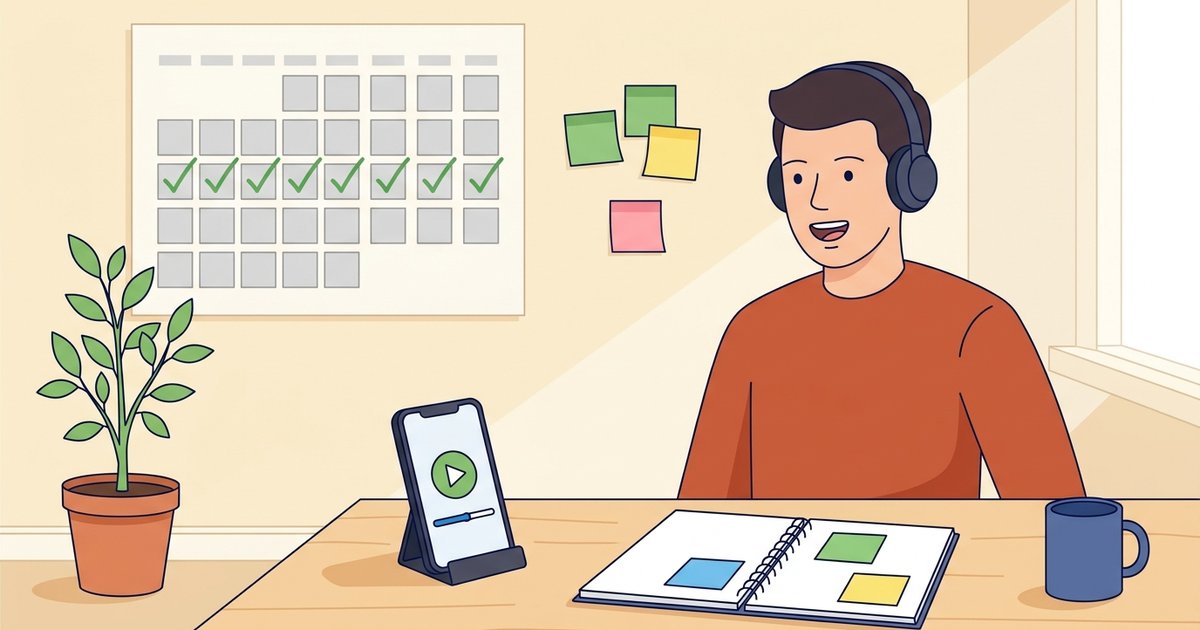
Most people who decide to learn a language stop within the first few weeks. It is rarely a lack of talent. They start with the wrong things: grammar tables, random word lists and long study sessions they cannot keep up. Here is a simpler path that works for busy adults.
The short answer
Pick one language, learn its most common words first, listen to it every day at a speed you can follow, and repeat out loud what you hear. Twenty to thirty minutes every day beats a long session once a week.
1Decide why you are learning
Your reason decides what to learn first. Travelling next summer? Focus on everyday conversation. Moving abroad? You need to understand fast, real speech. Want to watch films without subtitles? Listening matters more than writing. Write your reason down in one sentence and come back to it when motivation drops.
2Be realistic about the time
Languages close to one you already speak are faster to learn. The US Foreign Service Institute estimates that its full-time students need about 600 to 750 class hours to reach professional working proficiency in languages close to English, such as Spanish or French, and about 2,200 hours for languages such as Arabic, Japanese or Chinese.
You do not need professional proficiency to enjoy a language. Simple conversations come much sooner, and every day of practice moves you forward.
3Learn the most common words first
Words are not equally useful. A small set of very common words makes up a large share of everyday speech, so learning the most frequent ones first pays off fastest. A few hundred well-chosen words already let you follow simple conversations. Rare words can wait.
4Listen every day to things you can understand
Children understand long before they speak, and adults learn the same way: by hearing language they can mostly follow. Linguists call this comprehensible input. Audio far above your level is just noise. Audio where you know almost every word lets you pick up the rest from context.
5Start slow, then speed up
Native speakers run words together, which is why real speech sounds so fast to a beginner. Slow the audio down until you can hear each word, listen to the same story several times, and raise the speed as it becomes familiar.
6Repeat out loud
Once a sentence sounds familiar, say it back. Repeating right after a recording, often called shadowing, trains your mouth and your ear together, so speaking feels natural long before your first real conversation.
7Make it a daily habit
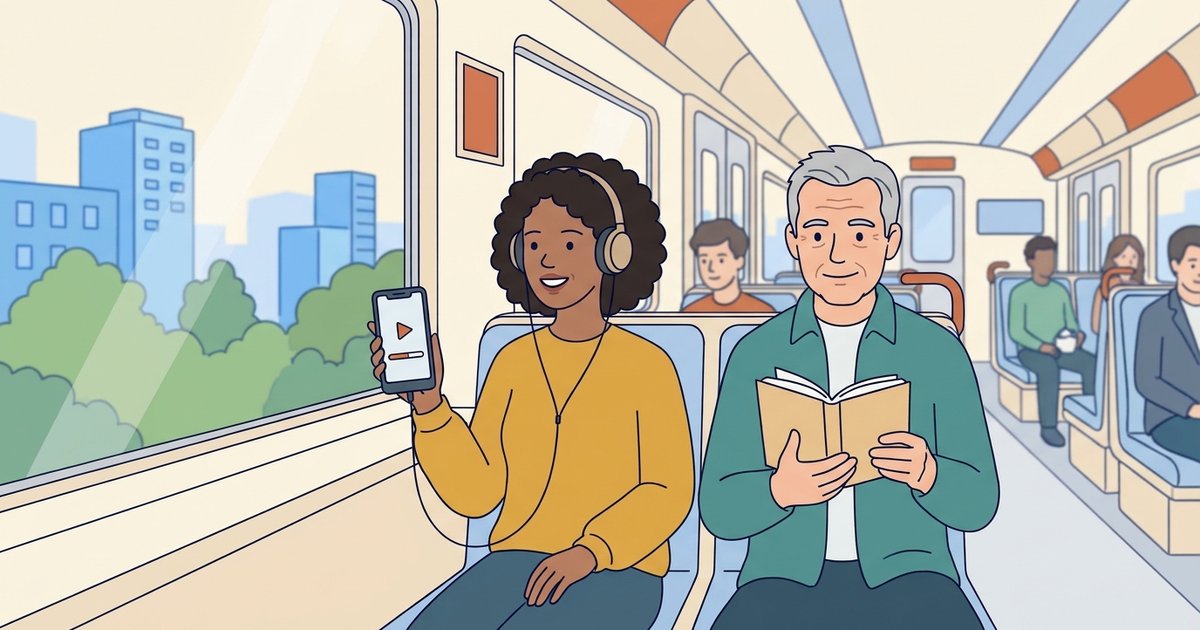
Short daily practice beats long, occasional sessions. Attach it to something you already do every day: the commute, a walk, washing the dishes. If your practice needs a desk and both hands, it will be the first thing you skip on a busy day.
8Use AI to get practice material at your level
AI assistants such as Claude or ChatGPT can write short stories and dialogues on any topic. Ask for texts that use only words you know plus a few new ones, then read or listen to them. Double-check anything important, because AI can make mistakes.
Common mistakes to avoid
- Starting with grammar tables. Grammar makes sense much faster once you have heard many examples.
- Memorising rare words. Long lists of random vocabulary are hard to remember and seldom heard.
- Only reading. If you never listen, real speech will feel too fast when you need it.
- Waiting until you feel ready to speak. Repeat out loud from the first week.
- Switching languages or apps every month. Progress comes from staying with one.
How LangLearn helps
LangLearn is built around these steps. Words are ranked by how often they are used, so you learn the most common ones first: 500 of them already cover about half of what you hear. Lessons and stories use only the words you already know plus a few new ones.
You can start each story at 0.7× speed and work up to full speed. Everything plays hands-free, so it fits your commute or a walk, and you can download playlists to listen offline. It runs in your browser and is free to start.
Frequently asked questions
How long does it take to learn a new language?
It depends on how close the language is to one you already speak and how much you practise. Simple conversations can come within months of daily practice. Professional fluency takes hundreds to thousands of hours.
Can I learn a language on my own?
Yes. Listening every day to material at your level, repeating out loud and adding conversation practice when you are ready lets you make steady progress without a class.
How many words do I need to know?
There is no single number, but the few hundred most common words cover a large part of everyday speech. Learn those first, then keep adding words in order of how common they are.
Am I too old to learn a new language?
No. People learn languages at every age. Adults often keep more of an accent than children, but they bring discipline, reading skills and a clear reason to learn.
What is the fastest way to learn a language?
Practise every day, focus on the most common words, and listen to material you can mostly understand. Speed comes from consistency, not from long sessions.