Why Am I Not Getting Interviews? 7 Reasons and How AI Fixes Them
Applying and hearing nothing back? Learn the 7 reasons applications get lost and how to fix each one, with real data from a Jobfinder search where AI read 710 postings, caught 116 dead ends and saved about 35 hours.

You have sent dozens of applications, maybe hundreds, and your inbox is quiet. It is easy to decide that your experience is the problem. Usually it is not. An application has to get through several gates before a person reads it, and most silent searches are stuck at one of them. Find the gate, fix that one thing, and the replies start to come.
The short answer
Most applications that get no reply never reached a person. The job had already closed, an automatic filter rejected the application on location, language or salary, or the job was never a real fit. Apply only to open jobs you fit, read the hard requirements first, apply on the company's own site, ask for a referral where you can, and put the match in the first lines of your résumé.
Where applications get lost, in numbers
of job seekers say they have applied to, or suspected, a "ghost job" that was never going to be filled.
HuntrWhat Jobfinder did in one real search
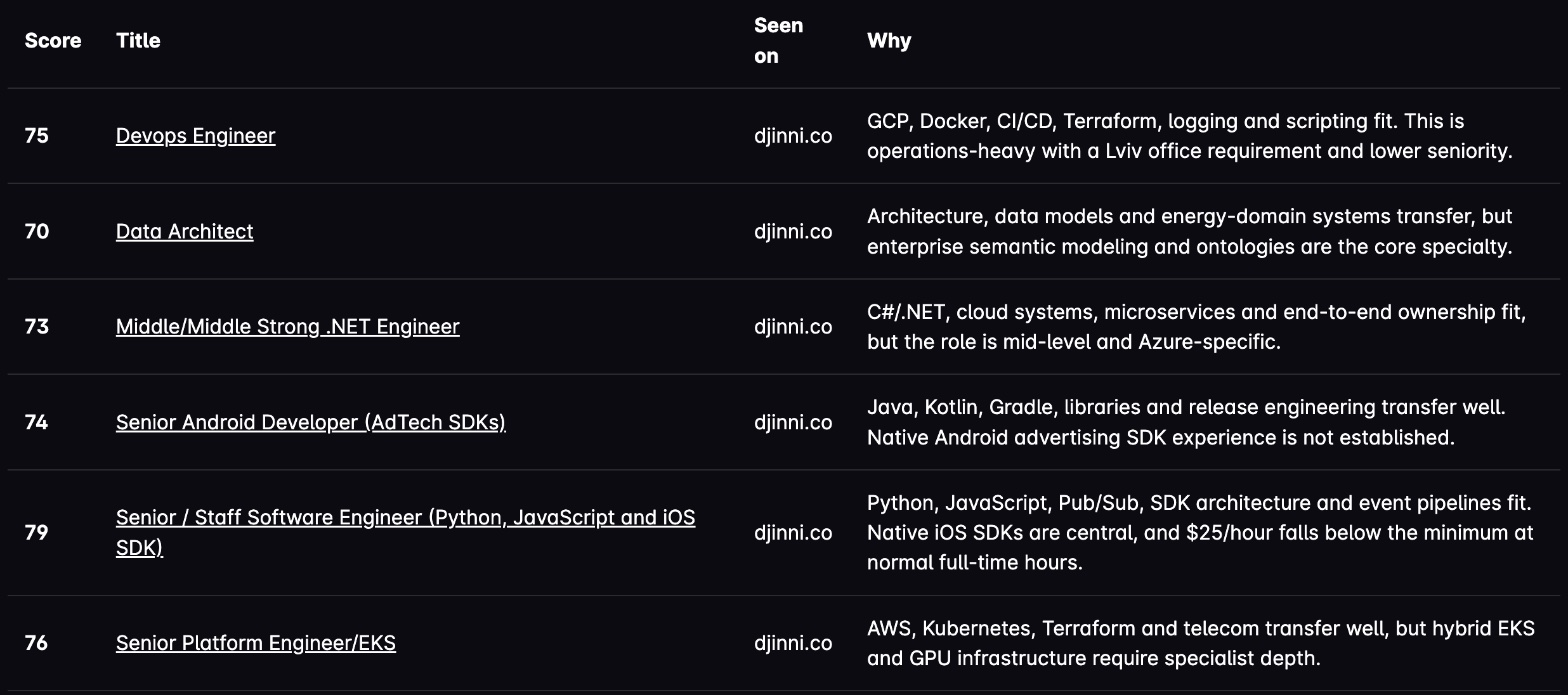
Here is one real search run with Jobfinder: a senior software engineer based in Ukraine, looking for work on Djinni, a large tech job board, from mid-October to early November 2026. In three weeks, the engineer's AI read 710 postings, set aside 153 clear mismatches before anyone had to read them, and scored 298 as strong matches.
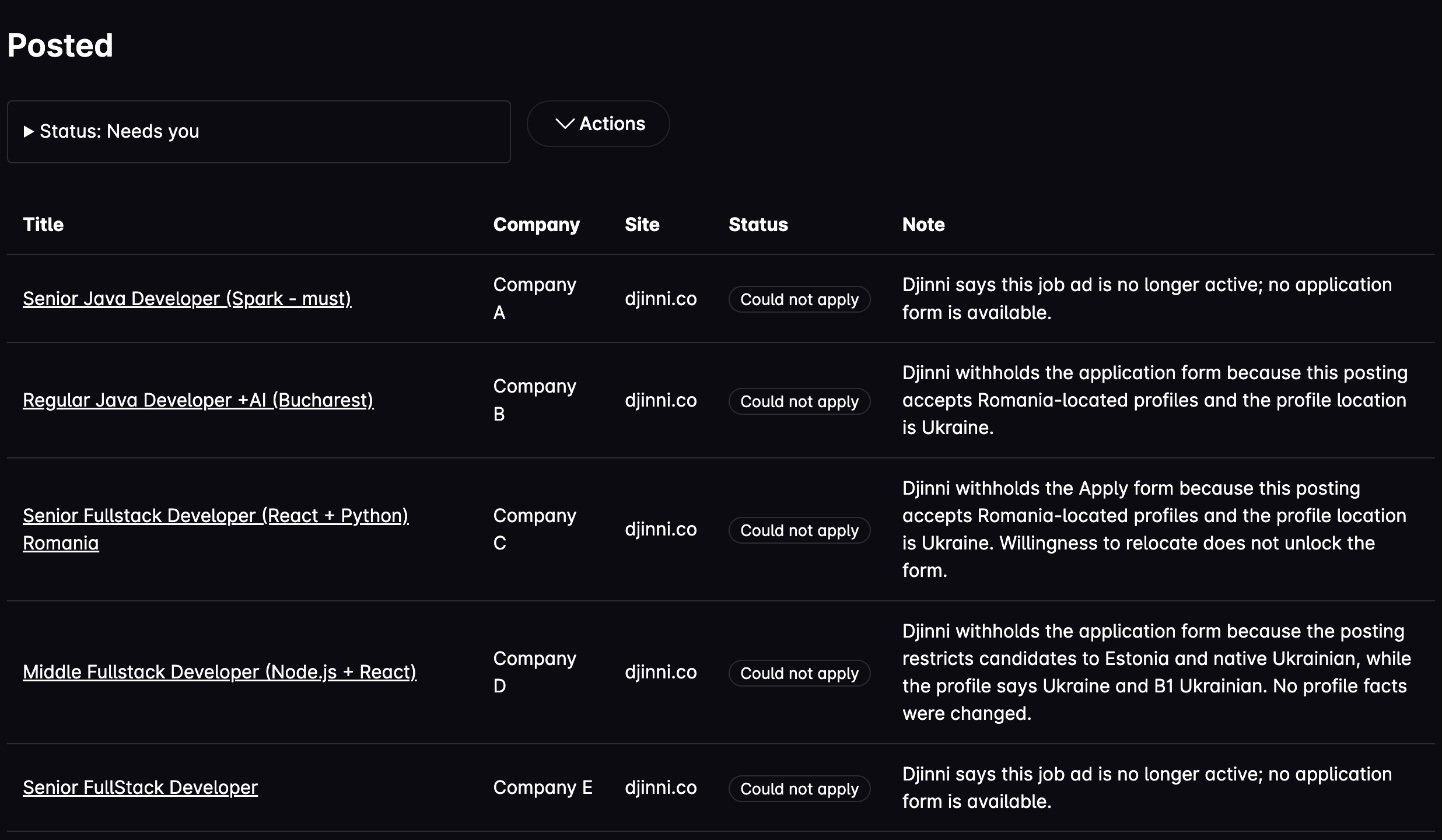
Jobfinder also caught 116 dead ends before they cost the engineer anything. About half were jobs that closed soon after they were found. Nearly all the rest were postings the job site would accept only from candidates in certain countries, with a certain language level or under a salary limit. Each one came back with a note saying exactly why, so instead of waiting weeks for replies that could never come, the engineer knew which jobs to drop and which requirements to watch for. Of the 168 applications that went out, 62, more than a third, got an answer from the employer.
How much work that took off the engineer's plate
of reading saved: 710 postings at about 3 minutes each (our estimate).
This searchdays, the median from finding a job to sending a tailored application. 167 of 168 went out within a week.
This searchjob-site emails linked to the right job automatically, so every reply was easy to find.
This searchapplication questions answered once and saved for later forms, instead of typed again each time.
This search“I stopped reading job ads. Jobfinder read 710 of them, told me which were worth my time and why, and caught the dead ends before I wasted a day on them. Most of my part was saying yes or no.”
The senior software engineer behind this search
Find where your search breaks
Before you change everything, look at what actually happens to your applications. Each pattern points to a different fix.
| What you see | Most likely reason | Start with |
|---|---|---|
| No reply at all, not even a rejection | The job was closed, or a filter removed you | Reasons 1 and 2 |
| Instant rejections, within hours | An automatic knockout question or hard requirement | Reason 2 |
| Polite rejections after a week or two | A person read it and saw a weaker match than other candidates | Reasons 3 and 6 |
| Lots of applications, almost no replies from companies | Your applications sit in crowded job-board queues | Reasons 4 and 5 |
| Screening calls, but no second interview | Your résumé works; the interviews need practice | Interview practice |
1The job was already gone
Postings stay online long after a role is filled, paused or cancelled, and some are put up with no plan to hire soon. In the search above, Jobfinder spotted more than 50 jobs that closed within days of being found and marked them as closed, so the engineer never sat waiting on them. Apply to recent postings, apply within a few days of finding them, and before you spend time on a cover letter, check that the job is still listed on the company's own careers page.
2A hidden filter rejected you
Many applications are rejected by a rule, not a person. Employers set hard requirements such as country, work permit, language level, years of experience or a salary limit, and job sites and applicant tracking systems check them automatically. In the search above, Jobfinder found postings that accepted only candidates in Poland, Romania or the EU, or required native Ukrainian, and reported each one with the reason instead of leaving the engineer to guess. Being willing to relocate did not unlock them, and knowing that saved a lot of wasted applications.
Read the requirements section before you apply, not after. Keep your profile on each job site complete and current, because those fields are what the filters read. Answer screening questions truthfully but completely: a blank answer can count as a "no". If you can legally work somewhere, say so plainly. If a hard requirement rules you out, skip the job and spend the time on one you can get.
3You are applying to jobs that are not a fit
When replies are slow, it is tempting to widen the net. But a role that is too junior, too senior or in the wrong specialty takes the same effort to apply for and almost never leads to an interview. Before applying, write one honest sentence on why you fit and one on what is missing. If the second sentence is longer, move on.
4You only apply through job boards
Job boards are great for finding jobs, but crowded places to apply. Huntr compared where its users sent their applications, and the company's own site came out ahead.
The gap holds even for the same people: those who used both routes got interviews from 6.2% of career-site applications and 4.9% of job-board ones. So find the job on a board, then look for it on the company's careers page and apply there.
5Nobody inside the company knows you
A referral moves your application from the pile to a person. In Ashby's 2026 data, covering millions of applications, 52% of referred candidates passed the first screen, against 35% overall. You do not need a close friend at the company. Find someone who does similar work there, mention something specific about their team, and ask whether they would be comfortable referring you or pointing you to the hiring manager. Keep it short and make saying no easy.
6Your résumé hides the match
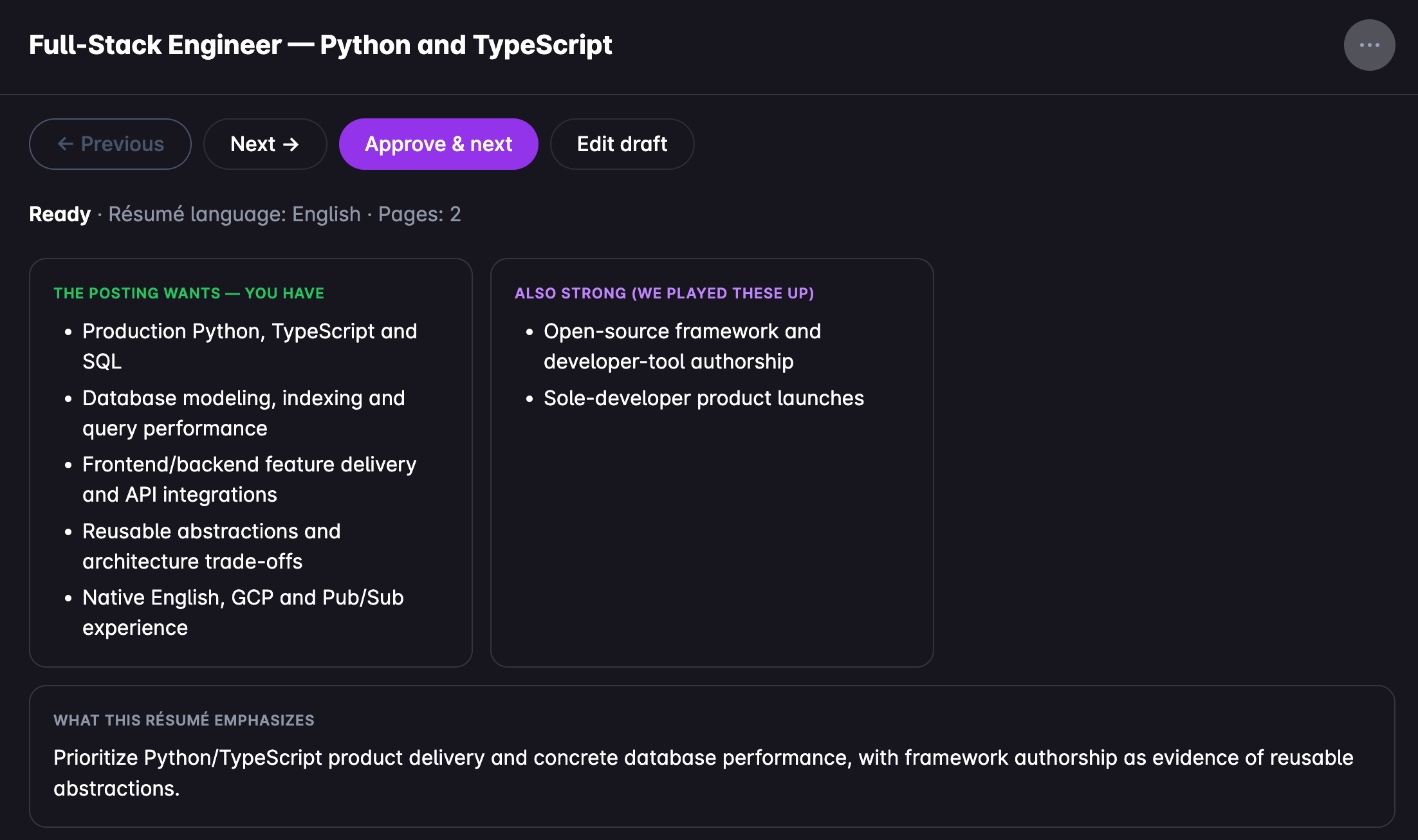
Recruiters search and skim. If the job title, the main skills and one strong result are not in the first third of the page, a reader may never get further. Name the role you want at the top, use the posting's own words for skills you really have, and keep the layout simple: one column, no tables, no text inside images, saved as a PDF or Word file the posting accepts. Our guide to using AI to find a job shows how to tailor the rest for each application.
7You never follow up, and you do not track
In Huntr's data, the median time from application to interview is just 5 days, so two weeks of silence usually means "not now". Send one short, polite follow-up to a real person, then let it go. Silence can also come later: 37% of job seekers Huntr surveyed said employers often stopped replying even after an interview. A simple tracker of where you applied, when, with which résumé and what happened next turns silence into data you can learn from.
A 15-minute weekly check-up
- How many applications did I send, and how many reached a person?
- Did any jobs close before I applied? Then apply sooner next week.
- Which requirement ruled me out most often, and should I stop applying to those jobs?
- How many applications went through company sites or a referral instead of a job board?
- Which applications are two weeks old and need one follow-up?
By hand vs. with Jobfinder
| The problem | By hand | With Jobfinder |
|---|---|---|
| Jobs that are already closed | You find out weeks later, if ever | Marked as closed, with a note, so you stop waiting |
| Hidden filters | Silence, and no idea why | The exact reason for every application that could not go out |
| Jobs that do not fit | You read every ad to decide | Every posting scored with a reason; clear mismatches set aside unread |
| Applying too late | Days go by while you read and rewrite | A median of 4 days from finding a job to a sent application in our search |
| A résumé that hides the match | One résumé for every job, or hours of rewriting | A résumé written for each job, from your verified experience |
| Repeated form questions | Typing the same answers again and again | Answer once; your answers are reused on later forms |
| Losing track | A spreadsheet you stop updating and replies lost in the inbox | Every application tracked, and job mail linked to the job it belongs to |
How Jobfinder helps
Jobfinder hands the slow parts of this list to your own AI, Claude or ChatGPT. It reads postings on the job sites you choose and scores each one against your matching prompt, with the reason behind the score, so you only look at jobs that fit. A job you dismiss never comes back.
For each job you accept, it writes a résumé aimed at that job from your verified experience, and you review the answers and documents before anything is submitted. Every application is tracked with a note on what happened, including the ones that could not be sent and why. Job-site mail is linked to the job it belongs to. When a site asks you to sign in, it stops and tells you; it never types your password. It is free.
Frequently asked questions
How many applications does it take to get an interview?
It varies a lot. In Huntr's Q3 2026 survey, 29% of job seekers got their first interview within 10 applications, while 26% needed more than 50. If you are past 50 with no interview, change something before you send more.
Is it normal to apply to jobs and hear nothing back?
Silence is common, but long silence across dozens of applications usually points to a fixable cause: closed postings, filters, the wrong jobs, the wrong channel or a résumé that hides the match.
How long after applying should I hear back?
In Huntr's Q3 2026 data, the median time from application to interview was 5 days. If you hear nothing after about two weeks, send one short follow-up, then move on.
Are ghost jobs real?
Yes. In Huntr's Q1 2026 survey, 93% of job seekers said they had applied to, or suspected, a posting that was never going to be filled. Apply to recent postings and check that the job is still open on the company's own site.
Should I apply if I don't meet every requirement?
Usually yes, if you meet the core of the job. Hard requirements are different: location, work permit, language level and salary range are often checked automatically, so read them before you apply.
Is LinkedIn Easy Apply worth it?
Use it to find jobs, but apply on the employer's own site when you can. In Huntr's data, applications through employer career sites led to interviews 1.7 times as often as applications through job boards.
Is it my résumé or the job market?
Check the steps in order. If your applications are not getting through at all, look at closed postings, filters and fit. If they get through but nobody replies, look at your résumé's first lines and at referrals. If you get screening calls but no second interview, it is your interviewing, not your résumé.